

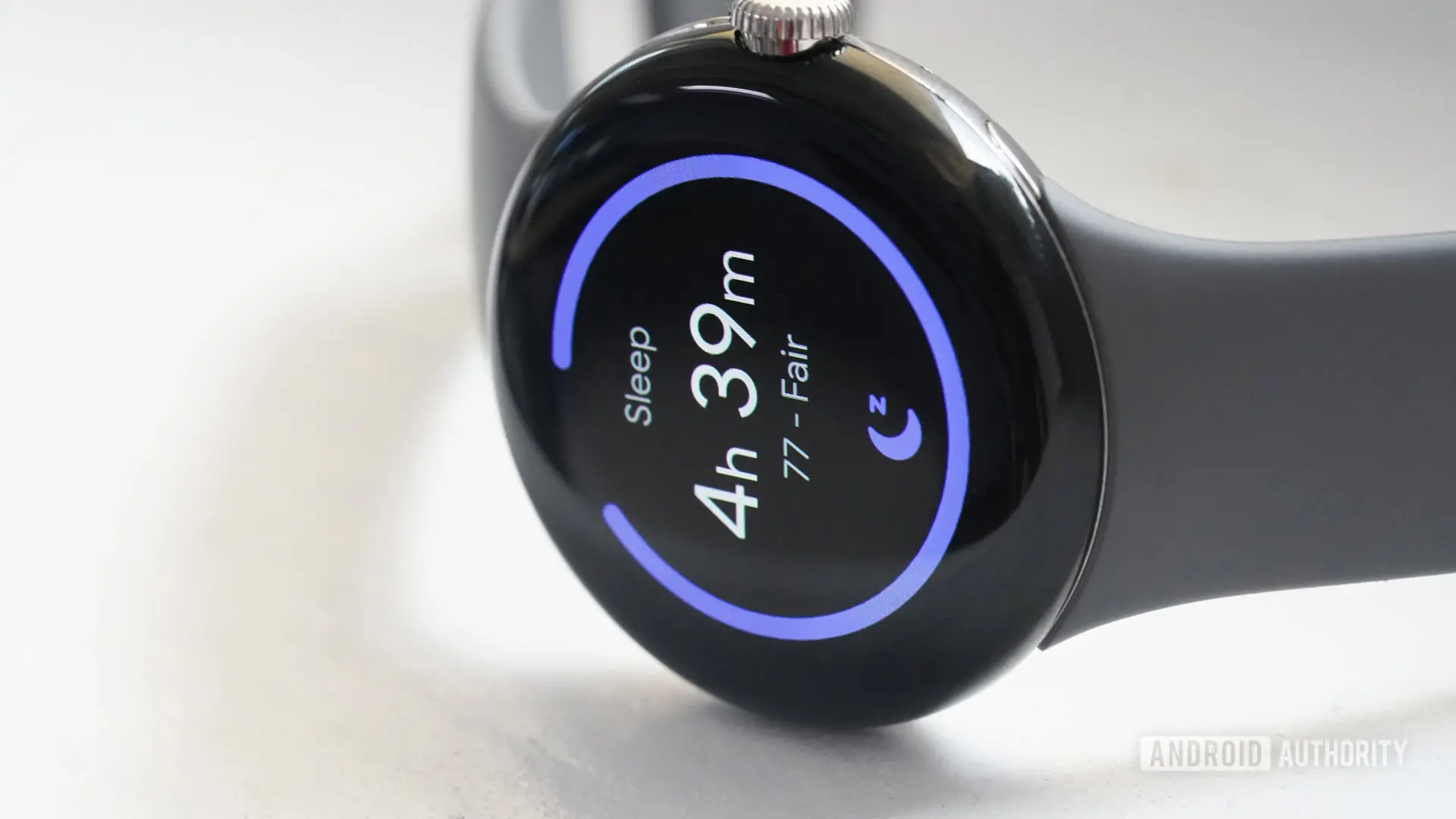
One of the most valued features of Google's Pixel Watch lineup is its sleep tracking capability. From monitoring time spent awake during the night to providing a daily sleep score, the data collected by the smartwatch is designed to help users understand and improve their sleep habits. However, the utility of this feature evaporates when users cannot access the data on their wrist. Recent reports indicate that a significant number of Pixel Watch owners are experiencing exactly this problem.
Over the past week, multiple users have taken to online forums, particularly Reddit, to share their frustration. A Pixel Watch owner described a situation that has persisted for days: despite wearing the watch to bed, the device displays a notification that reads, "No recent data. Wear your watch to sleep." What makes this particularly puzzling is that the sleep tracking function itself does not appear to be broken. The recorded data is still showing up in the Fitbit app on the user's smartphone, indicating that the watch is correctly capturing sleep metrics but failing to sync that information to the watch's own interface.
The Scope of the Bug
Since the initial Reddit post was published, dozens of other Pixel Watch owners have chimed in, confirming that they are facing the same issue. Based on the comments and subsequent discussions across social media, the bug appears to be concentrated among users of the Pixel Watch 2. Some owners of the original Pixel Watch have also reported similar symptoms, but the vast majority of complaints originate from the second-generation model. This suggests that the problem may be tied to a software update or a backend change specific to the Pixel Watch 2's firmware or its interaction with Google servers.
Notably, the issue does not seem to affect all Pixel Watch 2 users. A portion of owners have reported that their sleep data appears normally on the watch face and in the sleep tile. This inconsistency points toward a conditional bug—perhaps dependent on specific settings, language regions, or account configurations. At the time of writing, Google has not officially acknowledged the problem, leaving users to speculate about the root cause.
Possible Links to Google Health Transition
One leading theory among the community revolves around Google's ongoing integration of Fitbit into its broader health ecosystem. Google acquired Fitbit in 2021 for $2.1 billion, and since then, the company has been gradually migrating Fitbit's features and user base to its own platforms. A key part of this transition is the planned transformation of the Fitbit app into Google Health—a unified health and wellness app that will eventually replace the standalone Fitbit experience.
To smooth this transition, Google has already paused certain social features within the Fitbit app, such as challenges and groups. Some users suspect that behind-the-scenes changes to data syncing infrastructure may have inadvertently introduced this new bug. The sleep data is being recorded and stored on the watch, then transmitted to the Fitbit cloud, where it becomes accessible via the smartphone app. If the watch’s local cache refresh mechanism or the connection between the watch and the cloud is disrupted, the watch might not display any recent data even though the server has it.
This scenario is plausible given the complexity of syncing health data across multiple devices and platforms. Similar issues have occurred before in the smartwatch industry, particularly during major platform transitions. For example, when Apple introduced watchOS updates that changed how health data was stored locally and in iCloud, some users experienced temporary loss of data visibility on the watch. The same has happened with Samsung’s Galaxy Watch during transitions from Tizen to Wear OS.
How Sleep Tracking Works on Pixel Watch
To understand why this bug is particularly frustrating, it is helpful to appreciate how sleep tracking is implemented on the Pixel Watch. The device uses a combination of motion sensors (accelerometers) and heart rate monitoring to detect sleep stages: light sleep, deep sleep, REM, and awake periods. When you wear the watch to bed, it automatically identifies your sleep window based on your established routine and sensor input. After you wake up, a summary is generated, including total sleep time, sleep score (a rating out of 100), and detailed time spent in each stage.
This data is normally accessible directly on the watch through the Sleep tile. Users can tap the tile to see a brief summary, including the last night's sleep duration and score. The tile also provides a quick view of recent trends. Additionally, the sleep data is automatically synced to the Fitbit app, where more detailed graphs and historical comparisons are available. The bug currently blocks the watch-side view, leaving users dependent on their phone to check their sleep stats.
User Reactions and Workarounds
In the absence of an official fix, affected users have tried various workarounds. Some have attempted restarting the watch, clearing cache of the Fitbit app, unpairing and re-pairing the watch, or even performing a factory reset. None of these measures have consistently resolved the issue. A few users reported that after a day or two, the data suddenly reappeared on the watch without any action, hinting that the problem might be server-side or tied to a delayed update.
Another workaround that has shown mixed results is forcing the watch to resync by toggling Airplane mode on and off, or by opening the Fitbit app and manually pulling down to refresh. However, these methods are far from reliable. The uncertainty has led to frustration, especially among users who rely on the watch as their primary sleep tracker and prefer not to check their phone immediately upon waking.
Some users have taken to third-party sleep tracking apps that can pull data from the Pixel Watch sensors, but this adds complexity and may not offer the same level of integration. Overall, the community is waiting for an official statement or a software update from Google that addresses the bug.
Broader Implications for Google's Wearables Strategy
This incident highlights a growing concern among Pixel Watch owners about the reliability of Google's wearable ecosystem. The Pixel Watch series, which launched in 2022 with the original model and received a major hardware upgrade with the Pixel Watch 2 in 2023, is central to Google's ambitions in the health and fitness market. The company has positioned it as a premium smartwatch that competes with the Apple Watch and Samsung Galaxy Watch. However, recurring software bugs—especially those affecting core health features—can erode user trust.
Previously, the Pixel Watch faced issues such as inaccurate heart rate readings during exercise, delayed notifications, and battery drain problems. While many of these were resolved through updates, the current sleep data bug is particularly concerning because it affects a feature that is typically used every night. For Google's wearable division, maintaining a seamless user experience is critical as it aims to attract users away from Apple and Samsung.
The timing of this bug is also notable. It comes just as Google is starting to lay the groundwork for the integration of Fitbit into its own branded health services. Any disruption during this period can create negative press and amplify skepticism about the company's long-term commitment to the Fitbit community. In developing countries or emerging markets, where the Pixel Watch is a relatively new offering, such issues can significantly impact adoption rates.
Moreover, the lack of transparency from Google so far—no official acknowledgment or patch notes—leaves room for speculation. Users want assurance that their health data is being handled correctly and that the company is actively working on a fix. Silence from the manufacturer can lead to frustration and drive users to consider alternative smartwatches that offer more stable sleep tracking experiences, such as those from Garmin or Withings.
Historical Precedents in the Smartwatch Industry
Sleep tracking issues are not unique to Google. In 2020, Fitbit itself experienced a bug where sleep data would not sync from the Fitbit Versa 2 to the app for some users. That bug was traced to a server error and was resolved within a few days. Similarly, Apple Watch users in 2021 reported that sleep data occasionally failed to appear on the watch after an update to watchOS 8, a problem that required a minor software update to fix. Samsung’s Galaxy Watch 4 also had a period where sleep stages were not being recorded correctly on the watch interface, though the data was still captured in the Samsung Health app.
These examples show that such bugs are common but usually temporary. However, the expectation from users is that companies communicate promptly and provide a patch quickly. In the case of the Pixel Watch, the lack of updates has been a source of irritation. As of this writing, there is no confirmed timeline for a fix, but given the visibility of the issue, it is likely that Google's engineering teams are working on it.
In conclusion, the Pixel Watch sleep data display issue is an unresolved problem that impacts a core feature of the device. While the data itself is safe and accessible via the Fitbit app, the inconvenience cannot be overstated for users who rely on wrist-based glanceability. The possible connection to Google's broader health platform changes adds a layer of concern about the stability of upcoming transitions. For now, Pixel Watch owners are left waiting for an official response from Google—and hoping that their nightly rest data will soon reappear on their wrists.
Source: Android Authority News