

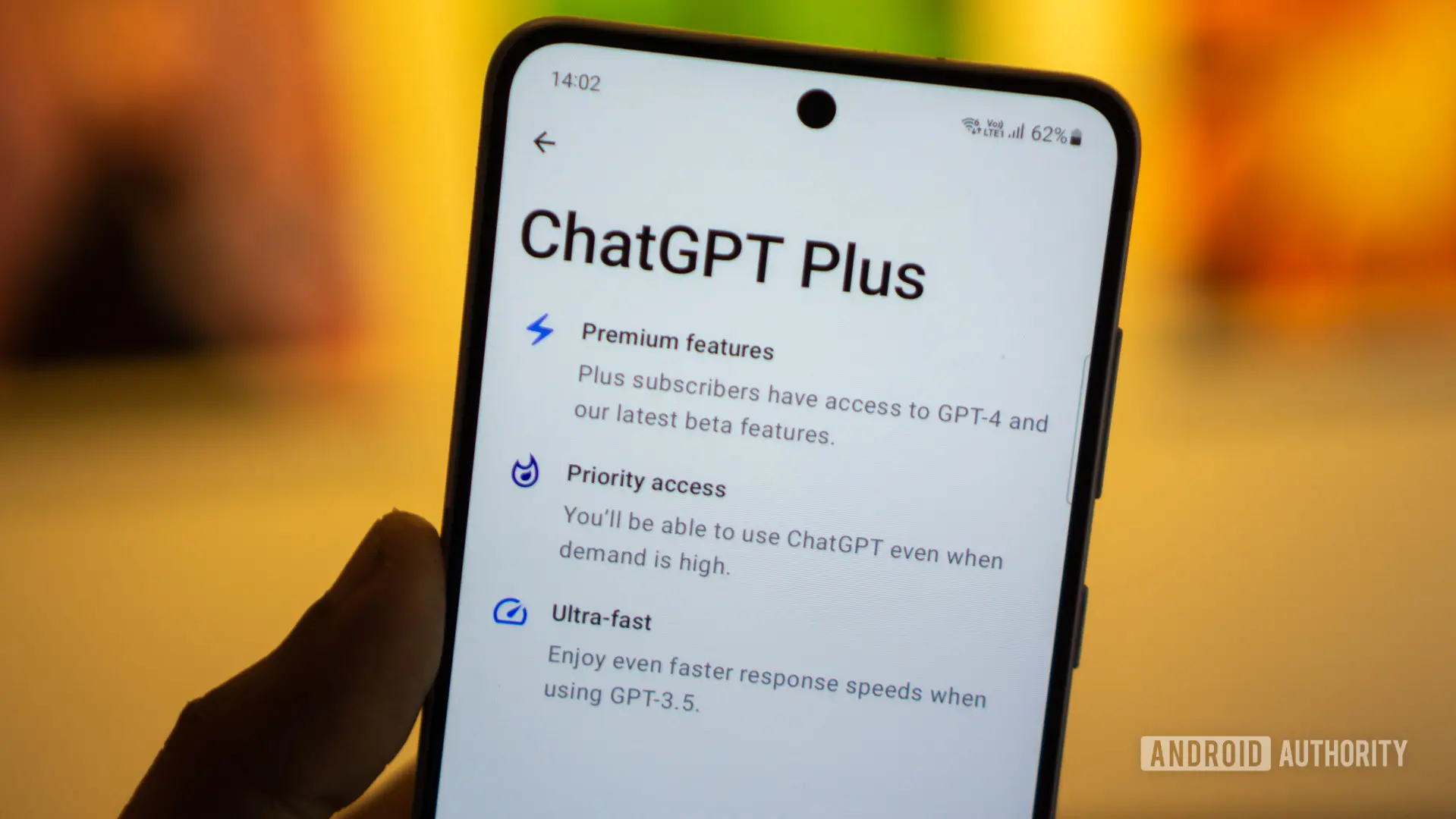
OpenAI is taking a bold leap into the realm of personal finance with a new feature that lets ChatGPT connect directly to users' bank accounts. Announced for Pro subscribers in the United States, this limited preview aims to transform the AI from a generic financial advisor into a hyper-personalized budgeting and planning tool. By tapping into real transaction data, ChatGPT can offer insights that go far beyond standard advice, but the move also raises significant questions about data privacy and trust.
What the Finance Experience Offers
The core of the experience is the ability to link external financial accounts—such as checking, savings, credit cards, and investment portfolios—directly through ChatGPT. Once connected, the AI can summarize balances, track spending patterns, and analyze income flows. Users can ask questions like "How much can I save each month if I cut out dining out?" or "Can I afford to switch to a lower-paying job?" Instead of generic answers, ChatGPT uses the user's own financial history to provide tailored responses.
OpenAI highlighted several practical use cases in its announcement. For example, ChatGPT can review subscription services to identify redundant charges, create a custom savings plan based on income and existing expenses, or even simulate the financial impact of a major purchase like a car or home. The tool also offers a dashboard view where users can see a clean breakdown of where their money is going—without needing to manually export or format data.
This level of integration builds on OpenAI's earlier moves into productivity and data analysis. The company has been gradually expanding ChatGPT's capabilities to handle sensitive information, such as legal documents and medical records, always with user permission. The finance feature represents the most intimate use case yet, because money habits often reveal far more about a person's lifestyle, priorities, and vulnerabilities than any other category of data.
Privacy and Security Concerns
Adopting an AI-powered financial assistant requires a significant leap of faith. OpenAI has attempted to address these concerns head-on. The company states that ChatGPT cannot see full account numbers or execute transactions; read-only access is limited to balances, transaction history, and investment holdings. Users can disconnect their accounts at any time, and once disconnected, synced data is deleted within 30 days. Additionally, the data is encrypted in transit and at rest, and OpenAI's existing privacy policies apply.
Nevertheless, critics point out that OpenAI's track record with unpredictable AI behavior is far from perfect. ChatGPT has been known to hallucinate facts, generate incorrect code, and occasionally produce biased or offensive output. While those issues are generally harmless in a conversational context, a mistake in financial advice—like underestimating taxes or suggesting a risky savings rate—could have real-world consequences. OpenAI explicitly cautions that ChatGPT is not a substitute for professional financial advisors, but users may still rely too heavily on its suggestions.
Another worry is long-term data handling. Even with a 30-day deletion window, users must trust that OpenAI's infrastructure is secure against breaches. The company has faced security incidents before, including a data leak in early 2023 that exposed chat histories. For many people, the idea of a single AI system holding a comprehensive view of their financial life is unsettling, regardless of the safeguards.
Comparison to Existing Budgeting Apps
There are already many apps on the market that analyze transaction data to help users budget, like Mint (now part of Credit Karma), YNAB (You Need A Budget), and Personal Capital. These services have been doing this for years, often with similar read-only access to bank accounts. What sets ChatGPT apart is the natural language conversational interface and the breadth of context it can consider.
Traditional budgeting apps typically rely on predefined categories and rules. If a user asks "How much do I spend on coffee?" the app will show a category total. But ChatGPT can go further: it can cross-reference coffee spending with income trends, suggest alternative brands based on user preferences, or even incorporate external data like local coffee price averages. Moreover, ChatGPT can handle multi-step reasoning, such as "If I cut my coffee spending by 30% and redirect that to my emergency fund, how many months will it take to reach $10,000?"
However, most budgeting apps are purpose-built for finance and have developed robust security protocols over years. OpenAI is relatively new to this domain, and its general-purpose AI may not have the same domain expertise or reliability as dedicated financial tools. For instance, YNAB's method of "giving every dollar a job" is backed by a specific philosophy that ChatGPT does not inherently follow—unless explicitly instructed to do so.
How It Works: Technical Details
To connect accounts, users will authenticate through OpenAI's partner Plaid, a widely used financial data aggregator that powers many popular apps. Plaid creates a secure link between the user's bank and ChatGPT without exposing login credentials to OpenAI. This is a standard approach in the industry, used by thousands of apps from Acorns to Venmo. After linking, ChatGPT can refresh transaction data several times a day, giving near-real-time insights.
The preview is currently limited to ChatGPT Pro subscribers in the US, who pay $20 per month. Only web and iOS versions support the feature at launch; Android users must wait for a future rollout. OpenAI has not announced a timeline for expanding to Plus or free tiers, but hints that wider availability is planned after testing. The company also emphasizes that the experience is experimental, and user feedback will shape its evolution.
Potential for Abuse and Regulation
Bringing artificial intelligence into such a sensitive area inevitably attracts regulatory scrutiny. In the US, financial data is protected by laws like the Gramm-Leach-Bliley Act and the Consumer Financial Protection Bureau's guidelines on data sharing. OpenAI must comply with these regulations, and any future mishandling could lead to enforcement actions. Moreover, the Federal Trade Commission has been increasingly active in policing AI companies' data practices. OpenAI's decision to start with a limited preview is likely a cautious step to preempt problems.
On the consumer side, users should weigh the convenience against the risk. A major concern is whether ChatGPT's access could be used to train or improve the model. OpenAI's current policy states that user data can be used to improve its models unless the user opts out via settings. For financial data, this seems particularly fraught, though OpenAI claims that sensitive financial data will not be used for training unless explicitly permitted—a claim that requires careful reading of the updated terms.
Another subtle risk is the potential for targeted marketing. If ChatGPT knows that a user spends heavily on streaming services, it might later recommend certain subscriptions—either directly or through subtle prompts. OpenAI says it does not sell user data, but the line between personalization and marketing can blur when an AI is designed to maximize engagement.
Availability and Platform Constraints
As of now, only US-based Pro subscribers on web or iOS can access the finance preview. Android users are conspicuously absent from the initial announcement, though OpenAI typically brings features to Android within weeks or months. The company has not explained the delay, but it may relate to differences in how Apple and Google handle account linking through their respective operating systems. Additionally, the feature is geographically restricted; users outside the US cannot enable it even if they are Pro subscribers.
This limited rollout strategy is common for OpenAI. The company often tests risky features on a small group of power users before scaling. For example, the earlier launch of ChatGPT plugins and browsing capabilities followed a similar pattern. However, given the high-stakes nature of financial data, the testing phase is especially critical. Any major bugs or privacy gaffes could undermine trust not only in this feature but in the entire ChatGPT platform.
OpenAI has not specified a clear timeline for expansion. In its blog post, the company simply said that "wider availability is planned" without details. It is likely that the preview will last at least several months while the engineering team monitors performance, security, and user feedback. Meanwhile, competitors such as Google's Gemini and Microsoft's Copilot are also developing finance features, so OpenAI's first-mover advantage may be short-lived.
For those who choose to opt in, the setup process is straightforward. Users navigate to a new "Finance" tab in the ChatGPT web app or iOS mobile app, accept the terms, and authorize account linking via Plaid. Once linked, a dedicated dashboard appears with an overview of net worth, spending breakdown, and trends. Users can then ask questions in plain English, and ChatGPT will reference the financial data in its responses. The system also offers periodic insights, such as alerts about unusual spending patterns or upcoming bills.
Despite the innovative feel, the feature is fundamentally a natural language interface over existing financial data aggregation technology. The real innovation lies in ChatGPT's ability to understand conversational queries and generate contextual advice, but the underlying data infrastructure—linking accounts via Plaid, normalizing transactions, categorizing spending—is already mature. OpenAI is essentially adding a smart layer on top of what many banks and fintech apps already provide. The difference is the depth of analysis and the freedom to ask unscripted questions.
While some users may balk at the idea of an AI reading their bank statements, others will see it as a natural extension of the convenience they already get from digital finance tools. The key will be transparency: users must understand exactly what data is being accessed, how it is stored, and how it can be deleted. OpenAI has provided some clarity, but the ultimate test will be in the execution over the coming months.
Source: Android Authority News