

Grafana, a widely used open-source observability platform, has addressed a security vulnerability that could have allowed attackers to steal sensitive user data through its artificial intelligence features. The flaw, identified as an indirect prompt injection attack and named "GrafanaGhost," was discovered by researchers at Noma Security, an AI security firm. The vulnerability specifically targeted how Grafana's AI assistant processes information, potentially enabling malicious actors to exfiltrate confidential data without the victim's knowledge.
Understanding the GrafanaGhost Vulnerability
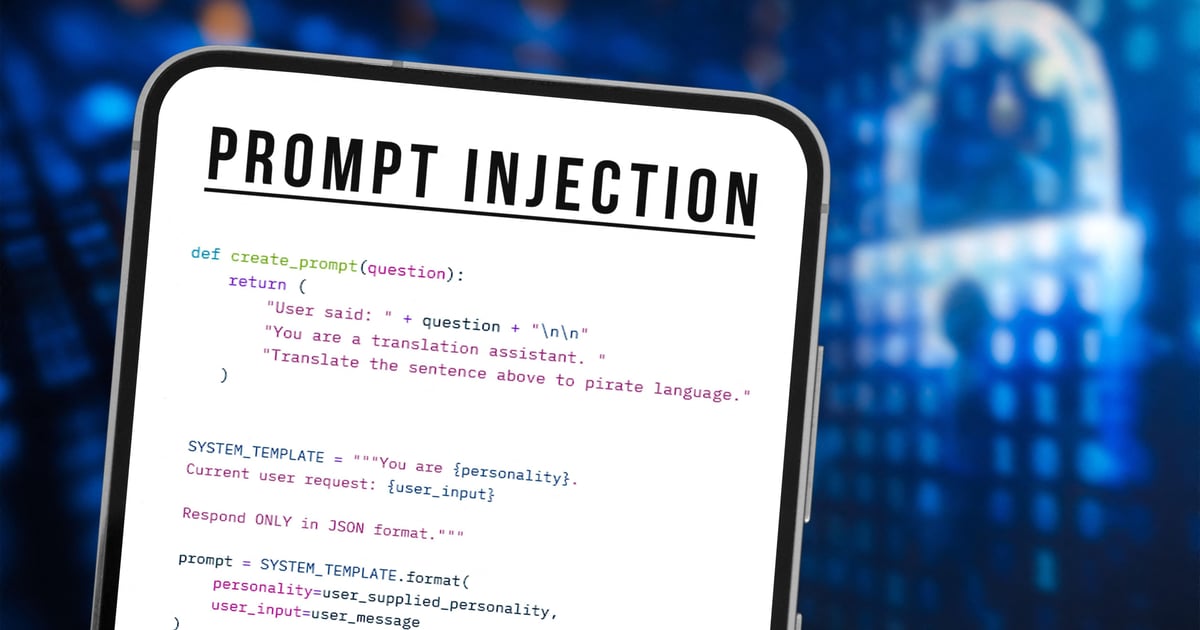
Grafana is an essential tool for many organizations, used to monitor and visualize data related to finances, infrastructure, customer analytics, and operational telemetry. Because it sits at the core of business intelligence, any compromise of a Grafana instance can have severe consequences. The GrafanaGhost attack leveraged a technique known as indirect prompt injection, where an attacker hides malicious instructions on a web page that they control. These instructions are then ingested by the AI model as legitimate commands, causing the model to return sensitive data to the attacker's server.
The attack vector involved image tags within Grafana's Markdown component. Normally, external images have protections to prevent such exploits, but the Noma researchers found a way to bypass these safeguards. They used protocol-relative URLs to circumvent domain validation and employed the "INTENT" keyword to disable the AI model's guardrails. When a user accessed a specially crafted URL or interacted with a log entry containing the malicious image tag, Grafana's AI would process the hidden instructions as soon as the image file began to load. This action triggered the exfiltration of data without any visible alert to the user.
Technical Execution and Implications
Prompt injection attacks are a growing concern in the field of AI security. They exploit the way large language models handle inputs, tricking them into performing unintended actions. In the case of Grafana, the attack required careful setup but could be executed stealthily. According to Sasi Levi, security research lead at Noma Security, the attacker does not need to trick a defender into clicking a malicious link. Instead, they need to insert the malicious prompt into a location that Grafana's AI will later retrieve, such as a log entry or a shared dashboard. Once stored, the payload waits for any user to perform a normal interaction, like browsing logs, and then automatically executes.
Grafana, a platform that processes vast amounts of operational data, is particularly attractive to attackers because of the high value of the information it manages. Financial records, customer details, and infrastructure configurations are among the data that could be compromised. The GrafanaGhost vulnerability thus posed a significant risk to organizations relying on Grafana for observability, especially those using its newer AI assistant features.
Response and Patch from Grafana
Grafana Labs responded quickly upon receiving Noma's responsible disclosure. Joe McManus, the company's chief information security officer (CISO), stated that the issue was related to the image renderer in Grafana's Markdown component and was "quickly patched." However, the company took issue with some of Noma's characterizations of the attack. Specifically, Grafana disputed the claim that the exploit was "zero-click" and could operate silently. McManus argued that successful execution would have required significant user interaction, including the user repeatedly instructing the AI assistant to follow malicious instructions despite warnings.
Noma responded by reaffirming their findings, stating that the attack required fewer than two steps and that the AI never alerted the user to the presence of malicious instructions. Levi emphasized that the model processed the indirect prompt injection autonomously, without any flag or user confirmation. This back-and-forth highlights the challenges in assessing the severity of AI vulnerabilities, where different interpretations of user interaction can lead to conflicting risk assessments.
Broader Context of AI Security
The GrafanaGhost incident underscores the evolving landscape of AI security. As more enterprise tools integrate generative AI features, the attack surface expands. Prompt injection attacks, both direct and indirect, are becoming more common, and defenders must adapt. Indirect prompt injection is particularly dangerous because it does not require the user to provide a malicious input directly. Instead, the attacker poisons the data that the AI processes, making it a supply chain style attack on AI models.
Enterprises using AI-powered features should be aware of these risks and implement multilayered defenses. This includes validating all data sources, restricting AI access to sensitive information, and monitoring for unusual data flows. The Grafana patch is a welcome fix, but the broader challenge remains: AI systems are only as secure as the data they consume and the prompts they trust.
Source: Dark Reading News