

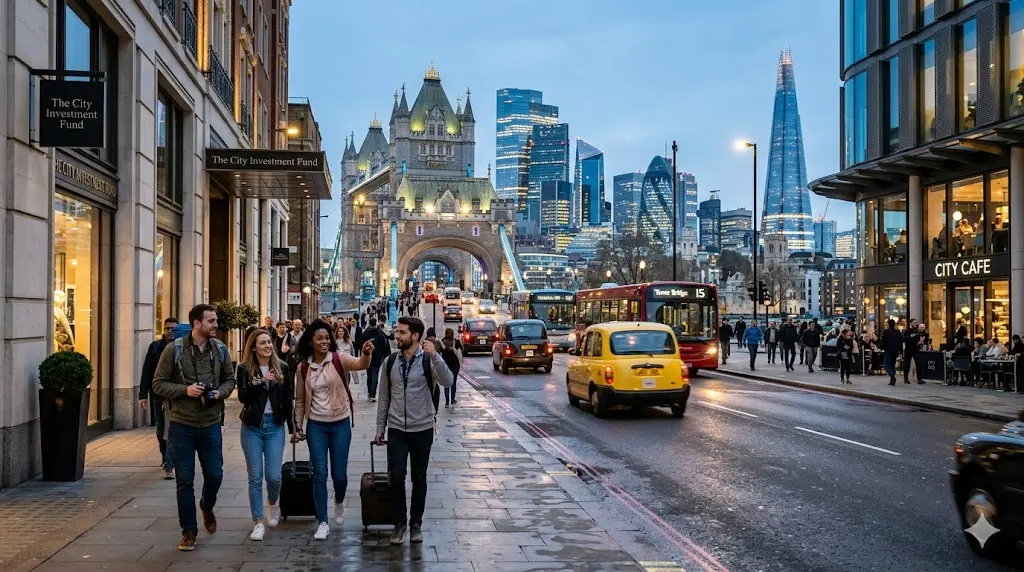
Urban tourism is no longer just about people visiting famous skylines or checking landmarks off a travel list. Research now shows that city-based tourism is directly influencing where global investors place money, how governments redesign infrastructure, and why international capital is flowing into entertainment districts, transport systems, and mixed-use developments faster than before.
Here’s the thing: travelers are changing city economies from the ground up. Investors have noticed. And in 2026, urban tourism is becoming one of the strongest signals for future international investment growth.
Urban tourism is reshaping international investment trends because cities attracting global visitors also attract infrastructure funding, foreign business expansion, digital innovation projects, and real estate investment. Tourist demand now affects everything from airport upgrades to smart mobility systems, which changes how investors evaluate long-term economic potential.
What Is Urban Tourism and Why Does It Matter?
Urban tourism refers to travel focused on cities and metropolitan regions where visitors engage with culture, entertainment, business hubs, technology districts, shopping areas, nightlife, and local experiences.
Urban Tourism — travel activity centered around cities where tourism supports economic growth, infrastructure development, and international business investment.
What most people overlook is that urban tourism isn’t only about hotels or restaurants anymore. It has become deeply connected to international finance and development policy.
A decade ago, investors mainly focused on industrial growth or manufacturing potential when entering new markets. That still matters, obviously, but tourism data now plays a much bigger role in investment analysis. Cities with rising visitor numbers often experience increased foreign direct investment because they demonstrate economic movement, consumer demand, and infrastructure readiness.
You can already see this happening across large metropolitan regions. Financial districts now sit beside entertainment corridors, convention centers, sports venues, and technology parks because investors want cities that remain active 24/7.
In my experience, this shift surprised many traditional investors. Tourism used to be treated as a secondary economic signal. Now it’s often viewed as an indicator of future urban expansion.
Why Urban Tourism Matters in 2026
The connection between tourism and international investment is becoming stronger because cities are competing globally rather than regionally.
Travelers today influence business decisions in ways that probably seemed impossible fifteen years ago. A city trending online for tourism often gains attention from venture capital groups, real estate firms, hospitality brands, and digital infrastructure companies almost immediately.
That creates a feedback loop.
More tourism brings more investment. More investment improves infrastructure. Better infrastructure attracts even more tourists.
And honestly, some governments are now designing economic strategies almost entirely around that cycle.
One unexpected trend is how younger travelers are influencing capital allocation. Investors monitor social behavior closely. If millions of visitors repeatedly spend money in certain districts, industries, or city experiences, those patterns become valuable investment signals.
Take a hypothetical example.
Imagine a coastal city experiencing a surge in digital nomad tourism. Cafes fill with remote workers, short-term rentals increase, and demand for co-working spaces rises sharply. Within two years, investment groups begin financing internet upgrades, apartment towers, and transportation hubs because tourism behavior revealed long-term economic opportunity before official data caught up.
That happens more often than people realize.
Expert Tip
Cities that combine tourism appeal with digital infrastructure usually outperform cities relying only on historic attractions. Investors want destinations where visitors can spend, work, and stay longer rather than simply pass through.
How Urban Tourism Is Changing International Investment Decisions
International investors now study tourism behavior almost like economists study stock markets.
They monitor spending patterns, transportation demand, hotel occupancy rates, online travel engagement, and even social media location trends.
Here’s how that process typically works.
1. Tourism Growth Signals Economic Activity
When cities experience sustained tourism growth, investors interpret it as evidence of stable economic circulation.
People spend money on transportation, dining, entertainment, retail, accommodation, and local services. That spending creates confidence in the broader urban economy.
Large investment firms rarely ignore cities with rapidly increasing tourism revenue.
2. Infrastructure Becomes a Priority
Tourism pressure forces governments to improve airports, rail systems, roads, internet connectivity, and public spaces.
Infrastructure upgrades reduce operational risk for foreign investors.
That’s huge.
What most guides miss is that investors often care less about tourism itself and more about the infrastructure improvements tourism demand creates.
3. Real Estate Markets Expand Faster
Urban tourism strongly influences mixed-use development projects.
Hotels blend with residential towers. Shopping districts connect to entertainment zones. Office developments include hospitality features.
This creates new investment categories that combine tourism with commercial real estate returns.
I’ve seen developers completely redesign projects once tourism forecasts improved.
4. International Brands Follow Visitor Traffic
Global retail companies and hospitality chains often enter markets where tourism momentum already exists.
That brand expansion encourages additional investment from financial institutions and private equity groups.
Tourism acts as proof of consumer demand before businesses fully commit.
5. Smart City Technology Receives More Funding
Cities attracting international visitors increasingly invest in digital systems such as smart mobility, AI-driven security, cashless payments, and energy-efficient infrastructure.
Those upgrades attract technology-focused investors looking for scalable urban innovation opportunities.
Why Are Investors Paying More Attention to Tourist Behavior?
Tourist behavior offers real-time market intelligence.
That’s probably the simplest way to explain it.
Traditional economic reports can lag behind actual consumer behavior by months or even years. Tourism data moves faster. Investors can track spending, movement, booking trends, and regional demand almost instantly.
A city packed with visitors sends a visible signal of economic energy.
And there’s another layer people often ignore.
Tourists frequently behave like future residents or business founders. Remote workers test cities before relocating. Entrepreneurs visit business districts before opening offices. Students explore education opportunities during tourism trips.
Travel patterns often predict migration and investment patterns later.
That’s one reason governments aggressively market urban tourism internationally.
How to Analyze Urban Tourism Investment Trends Step by Step
If you want to understand where international investment may flow next, studying tourism indicators can help quite a bit.
Step 1: Track International Visitor Growth
Start by looking at cities with steady annual tourism increases rather than short viral spikes.
Consistent growth matters more than temporary popularity.
Step 2: Monitor Infrastructure Spending
Pay attention to airports, metro systems, convention centers, and smart mobility projects.
Large infrastructure spending usually signals long-term investor confidence.
Step 3: Evaluate Digital Connectivity
Cities investing heavily in public internet systems, digital payments, and smart city technology often attract international capital faster.
Remote work culture accelerated this trend massively.
Step 4: Examine Mixed-Use Real Estate Projects
Urban tourism influences housing, retail, offices, and hospitality simultaneously.
Developments combining these sectors often indicate broader investment momentum.
Step 5: Study Government Tourism Policies
Some cities actively design tax incentives, startup zones, or tourism-driven investment districts.
Policy support can dramatically influence foreign investment flows.
Expert Tip
Don’t assume luxury tourism always creates the strongest investment growth. Mid-range tourism with long visitor stays often generates steadier economic activity than high-end tourism focused on short visits.
Common Mistake: Assuming Tourism Only Benefits Hospitality
This is where many people get the story wrong.
Tourism isn’t only helping hotels or airlines anymore. Urban tourism now affects finance, logistics, software development, healthcare services, property technology, and even renewable energy investment.
Let me be direct: cities aren’t competing just for tourists. They’re competing for the economic ecosystems tourists attract.
A city improving public transport for visitors also improves transportation for workers and businesses. A city expanding airport capacity for tourism also supports international trade.
Everything overlaps.
That overlap is exactly why investment patterns are shifting.
Expert Tips and What Actually Works
In my experience, investors who focus only on traditional economic indicators sometimes miss major urban opportunities.
Tourism patterns reveal emotional engagement with cities, and emotional engagement matters more than many analysts admit.
People invest where they want to spend time.
That sounds overly simple, maybe even a little cheesy, but it’s surprisingly accurate.
I once spoke with a commercial property consultant who admitted that several investment groups began studying nightlife activity and cultural festivals before deciding where to build office districts. Ten years ago, that would’ve sounded ridiculous. Today, it’s fairly normal.
Another hot take?
Smaller cities may outperform famous capitals over the next decade.
Why?
Because overcrowded tourism hubs are becoming expensive and difficult to manage. Investors increasingly look for secondary urban centers with growing tourism potential, lower operating costs, and stronger room for expansion.
That trend could reshape international investment geography faster than people expect.
Expert Tip
Cities that balance tourism growth with local quality of life usually maintain stronger long-term investment appeal. Over-tourism often creates infrastructure strain that eventually weakens investor confidence.
How Technology Is Accelerating Tourism-Based Investment
Technology changed urban tourism more than most policymakers predicted.
Travel decisions now happen through algorithms, creator content, mobile booking systems, and real-time recommendations.
That creates faster economic shifts.
One viral district can suddenly attract international attention and investment within months rather than years.
Digital payment systems also changed tourist spending behavior. Visitors increasingly expect seamless transactions, app-based transportation, smart ticketing, and cashless experiences. Cities unable to provide those systems risk losing both tourism revenue and investor interest.
Blockchain systems, AI analytics, and urban data collection are becoming part of city planning because investors want measurable economic performance.
And honestly, some cities are turning themselves into living technology demonstrations to attract international capital.
What Does This Mean for Governments and Policymakers?
Governments now face a difficult balancing act.
They want tourism-driven growth without damaging local communities or creating housing pressure. At the same time, they want international investment without making cities financially inaccessible for residents.
That tension probably becomes one of the defining urban policy challenges of the next decade.
Successful cities will likely be those that combine tourism expansion with sustainable planning, digital infrastructure, environmental protection, and affordable public services.
Otherwise, growth becomes unstable pretty quickly.
People Most Asked About Why Urban Tourism Is Reshaping International Investment Trends
Why does urban tourism attract international investors?
Urban tourism demonstrates active consumer spending, infrastructure demand, and economic growth potential. Investors often see tourism-heavy cities as lower-risk environments for long-term development projects.
Does tourism directly influence real estate investment?
Yes, very strongly. Increased tourism often raises demand for hotels, apartments, mixed-use developments, entertainment districts, and transportation-linked commercial property.
Are smaller cities becoming more attractive to investors?
In many cases, yes. Secondary cities with rising tourism and lower operating costs are attracting growing investor interest because they offer expansion potential without severe overcrowding.
How does technology affect tourism investment trends?
Technology accelerates visibility and economic activity. Smart city systems, digital payments, AI analytics, and app-based services improve tourist experiences while increasing investor confidence.
Can tourism growth create economic problems?
Absolutely. Rapid tourism expansion can increase housing costs, pressure infrastructure, and create overcrowding if cities fail to manage growth responsibly.
Why are governments investing heavily in tourism infrastructure?
Tourism infrastructure often supports broader economic development. Airports, transportation systems, digital networks, and public spaces benefit both visitors and businesses.
Is tourism data reliable for predicting investment trends?
It’s not perfect, but tourism behavior often reveals economic momentum earlier than traditional reports. Investors increasingly use tourism metrics alongside financial indicators.
Final Thoughts
Why Urban Tourism Is Reshaping International Investment Trends comes down to one simple reality: cities attracting people also attract money.
Tourism now influences infrastructure planning, real estate expansion, technology funding, and global investment strategy in ways that weren’t fully understood even a few years ago. As urban experiences become more connected to digital systems, remote work, and international mobility, investors will probably continue using tourism behavior as a powerful indicator of future economic opportunity.
The cities that adapt intelligently — without sacrificing livability — are the ones most likely to dominate international investment conversations through 2026 and beyond.
Our network helps businesses improve brand visibility through online press release distribution and trusted digital marketing services, giving startups, agencies, and SEO professionals access to high authority backlinks, stronger SEO ranking opportunities, wider media coverage, and faster organic traffic growth through instant publishing solutions designed for modern online expansion.