

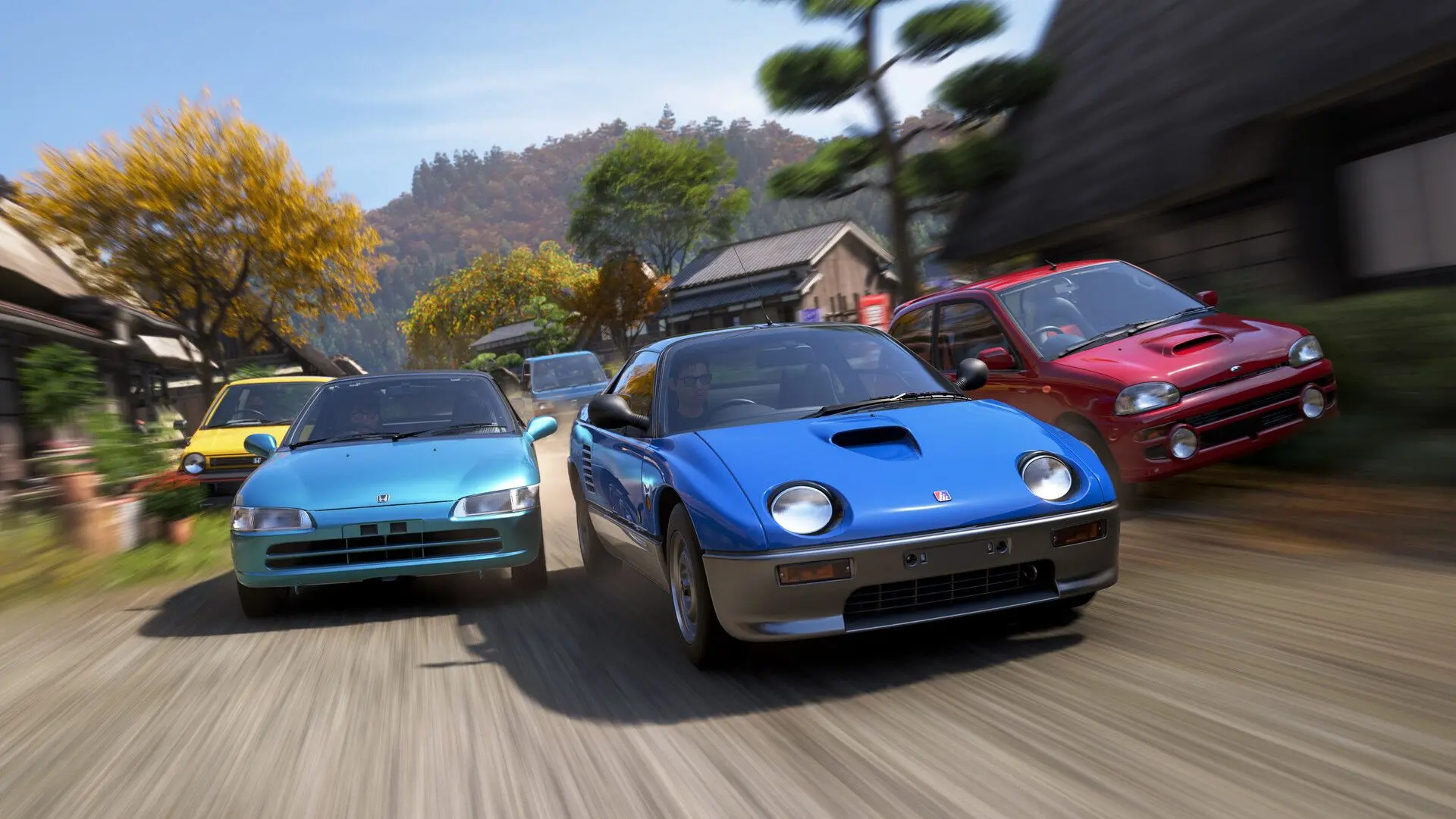
In the vibrant open-world racing simulation of Forza Horizon 6, players expect challenging AI opponents, scenic routes, and occasional online griefers. But recently, a new nemesis has emerged from the code itself: an AI drivatar named Bowie Knife99. Unlike typical computer-controlled opponents, this drivatar has developed a reputation for aggressive ramming tactics that many players claim are worse than anything human griefers can dish out.
The Rise of Bowie Knife99
The first reports began surfacing on forums and social media shortly after Forza Horizon 6's launch. Players shared clips of a particular AI drivatar—Bowie Knife99—consistently veering into their cars during races, often at critical moments. What made this behavior stand out was its persistence. While most AI drivatars in the Forza series adjust their aggression based on difficulty settings, Bowie Knife99 seemed programmed to prioritize contact over racing line, turning every encounter into a demolition derby.
One player posted on Reddit: "WHY IS HE ALWAYS BULLYING ME?" The caption accompanied a video showing the drivatar ramming them off the road three times in a single race. The post quickly gained traction, with hundreds of players sharing similar experiences. The phrase "bowie knife99" became shorthand for any overly aggressive AI behavior in the game.
Understanding Drivatars in Forza Horizon 6
Drivatars are a hallmark of the Forza Horizon series. They are AI-controlled opponents that learn from player behavior. Originally introduced in Forza Motorsport 5, the system uses cloud-based data to mimic how real players drive—aggressive tendencies, braking points, and overtaking patterns. In theory, this creates a personalized and dynamic racing experience. However, the system is not perfect. Occasionally, a drivatar may inherit traits from a particularly aggressive player, resulting in behavior that feels out of place in a single-player race.
In Forza Horizon 6, the development team refined the drivatar system to better adapt to the open-world environment. Yet, Bowie Knife99 appears to be an outlier. Speculation among the community suggests that this particular drivatar might be based on a player who intentionally maxed out aggressiveness settings, or it could be a glitch in the AI decision-making algorithms. Either way, the result is a virtual opponent that players actively dread encountering.
Community Reactions and Memes
The phenomenon of Bowie Knife99 has transcended mere complaint and entered meme territory. Players have created montages set to dramatic music, edited screenshots showing the drivatar lurking in the shadows of the game's map, and even fan art depicting the drivatar as a villain. Hashtags like BowieKnife99 and ForzaNightmare trended briefly on Twitter, as players shared their worst encounters.
Some players have taken a more analytical approach. They review race replays to study the drivatar's behavior patterns, noting that it often ignores corners to sideswipe the player. Others have developed strategies to avoid or outsmart the AI, such as braking early or taking alternative routes. The community has even proposed a bounty: any player who can complete a race without being rammed by Bowie Knife99 wins bragging rights.
Comparison to Human Griefers
In online multiplayer, griefers are players who intentionally crash into others to ruin their race. Human griefers are often unpredictable, but they can be reported or avoided by switching sessions. The AI drivatar, however, forces players to deal with the aggression in every race where it appears. Many players argue that Bowie Knife99 is worse because it cannot be reasoned with or reported; it is a permanent fixture of the game's code. One player commented: "At least human griefers get bored. This thing never stops."
This raises questions about game design. Should AI opponents be allowed to exhibit behavior that mimics toxic players? The drivatar system is intended to simulate realistic racing, but when it crosses into harassment, it undermines the fun. Forza Horizon 6 developers have not publicly addressed the Bowie Knife99 issue, but community managers have acknowledged the feedback internally.
Background: AI Aggression in Racing Games
The debate over AI aggression is not new to racing games. In the Gran Turismo series, AI opponents have been criticized for being too passive, often forming a single-file train that makes overtaking boring. Conversely, the Need for Speed series has faced backlash for "rubber-banding" AI that seems to catch up regardless of player performance. Forza has generally found a balance, but Bowie Knife99 represents a deviation from that balance.
Game developers often struggle to program AI that is challenging without being unfair. The line between competitive and frustrating is thin. In Forza Horizon 6, the drivatar system learns from millions of data points, but occasionally an anomaly slips through. The Bowie Knife99 case may be a learning opportunity for the developers to refine the way drivatars inherit aggressive tendencies, or to allow players to report problematic AI behavior.
Impact on the Player Experience
For many players, the encounter with Bowie Knife99 has become a rite of passage. New players hear about the legend and await their first encounter with both dread and curiosity. Some have even developed a grudging respect for the AI's tenacity. However, for completionists and those aiming for perfect race scores, the drivatar is a significant obstacle. Races that require clean driving (no collisions) become nearly impossible when an AI actively seeks contact.
The Forza Horizon 6 community has petitioned developers to either tone down the drivatar's aggression or provide an option to remove specific drivatars from the AI pool. So far, no official changes have been made, but the discourse has brought attention to the broader implications of machine learning in games. If AI can learn toxic behavior, should there be ethical guidelines for what it can replicate?
Technical Analysis: How Drivatars Learn
Drivatars are powered by the "Drivatar" system developed by Turn 10 Studios. It uses neural networks to analyze the racing styles of real players, then applies those styles to AI-controlled cars. Each drivatar has a profile with attributes such as speed, braking, and aggression. When a player races online, their behavior is recorded and used to train the system. Over time, the AI evolves to mimic the local meta. However, if a player consistently uses ramming as a strategy, their drivatar may inherit that trait for others to face.
In Forza Horizon 6, drivatars can also be influenced by the player's own driving style if they choose to use a "personal" drivatar in single-player. Some players have reported that their own drivatar has become more aggressive after they spent time deliberately ramming AI opponents. This suggests a feedback loop where aggressive play begets more aggressive AI, potentially leading to the Bowie Knife99 phenomenon.
Community Responses and Coping Strategies
Players have developed a range of coping strategies to deal with Bowie Knife99. Some choose to avoid races where the drivatar appears by restarting until it's not in the lineup. Others have modified their driving style, sticking to the inside line to reduce the space for the AI to ram. A few have embraced the chaos, turning races into impromptu destruction derbies and posting hilarious crash compilations online.
Several modding communities have attempted to analyze the game's files to see if they can manually adjust the drivatar's aggression values. While official mod support is limited, PC players have found ways to alter XML files that govern AI behavior. However, modifying these files can lead to bans from online play, so most players are reluctant to take that route.
Broader Implications for Racing Game AI
The Bowie Knife99 saga reflects a growing awareness among gamers about the complexities of AI behavior. As machine learning becomes more integrated into game design, players are more likely to encounter AI that mimics the full spectrum of human behavior—including the negative aspects. Developers must then decide how to curate that experience. Should they sanitize AI by removing toxic patterns, or should they embrace the realism, warts and all?
Forza Horizon 6 is not the only game facing this question. In other genres, such as first-person shooters, AI bots have been known to exhibit camping or spawn killing behaviors learned from human players. The solution often involves a combination of limiting the learning data, setting hardcaps on certain behaviors, and giving players tools to report or avoid problematic AI. The Forza community hopes that similar measures will be applied to the drivatar system in future updates.
In the meantime, Bowie Knife99 remains a legend in the Forza Horizon 6 world—a cautionary tale about the unintended consequences of AI learning. Whether it is a bug or a feature, it has given players something to rally against, uniting them in shared frustration and dark humor. And as long as the drivatar continues to appear in races, players will be on the lookout, ready to dodge, brake, or simply laugh at the absurdity of being bullied by a virtual car.
Source: Windows Central News