

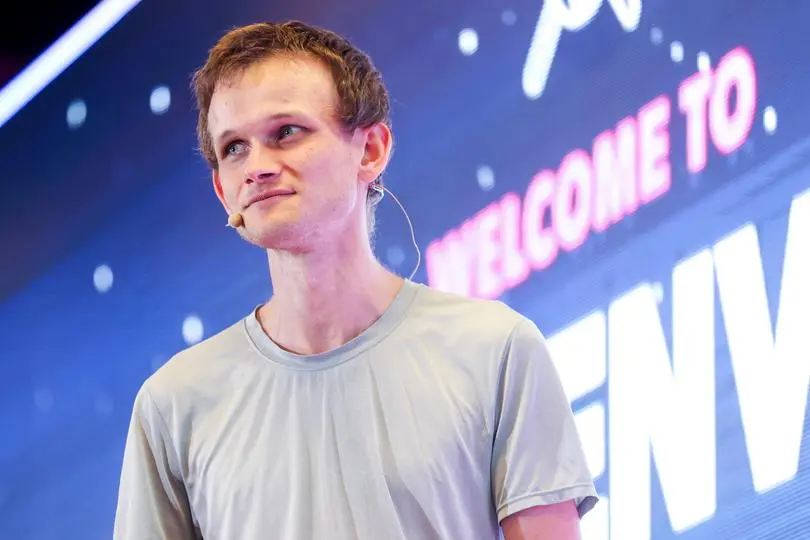
Ethereum co-founder Vitalik Buterin has sparked a new discussion in the crypto community by advocating for the use of artificial intelligence in formal verification to enhance security. In a blog post published on May 18, 2026, Buterin argued that AI-assisted formal verification could become one of the most critical tools for cybersecurity in the blockchain space. Formal verification involves using machine-checkable mathematical proofs to verify that software behaves correctly, which could help identify vulnerabilities before they are exploited.
Buterin pointed out that as AI advances, it also lowers the barrier for malicious actors to find bugs and create exploits. This dual-use nature of AI means that the same technology that can accelerate software development can also be used to attack systems. However, he believes that pairing AI-generated code with formal verification could ultimately create more secure systems for blockchains, cryptography, and other critical internet infrastructure.
The Growing Threat of AI-Powered Attacks
The crypto industry has long been a target for hackers, with billions of dollars lost to exploits and breaches. According to a report from Chainalysis, over $2.5 billion was stolen in crypto-related hacks in 2025 alone. Buterin argues that AI will exacerbate this problem by making it easier to find and exploit vulnerabilities. AI can automate the process of scanning code for weaknesses, generating attack vectors, and even developing sophisticated phishing campaigns. In response, the industry must adopt new defensive strategies.
Formal Verification as a Defense
Formal verification is not a new concept, but its application in blockchain has been limited due to the complexity and cost. It involves writing mathematical specifications of software behavior and then using tools to prove that the code meets those specifications. This process can catch bugs that traditional testing might miss. However, it is time-consuming and requires specialized expertise. Buterin suggests that AI can accelerate this process by automating parts of the verification, such as generating proofs or identifying likely error states.
For example, Ethereum&39;s own smart contract language, Solidity, has been subject to numerous high-profile bugs, such as the 2016 DAO hack. Formal verification could have prevented such incidents. Buterin notes that AI can assist in creating formal specifications for code, making the process more accessible to developers. He also envisions a future where AI-powered tools run continuously on blockchains, verifying every transaction and contract in real-time.
The Role of AI in Blockchain Security
Buterin&39;s proposal comes at a time when the intersection of AI and blockchain is being explored in various ways. Some projects are using AI to optimize transaction routing, while others are developing decentralized AI marketplaces. However, security remains a primary concern. The Ethereum Foundation has been funding research into formal verification for years, but Buterin now sees AI as a catalyst that can make it practical on a large scale.
One of the key insights from Buterin&39;s post is that while AI may initially lead to more vulnerable software, the same technology can be harnessed to create stronger defenses. He draws an analogy to the arms race in cybersecurity: as attacks become more sophisticated, defenses must also evolve. AI-driven formal verification could be the next line of defense, providing a mathematically rigorous way to ensure that code behaves as intended.
Challenges and Considerations
Despite the potential, implementing AI-assisted formal verification is not without challenges. The AI itself must be secure and free from bias. If the AI makes errors in generating proofs, it could give a false sense of security. Additionally, the computational cost of formal verification is high, and running it on-chain would require significant resources. Buterin suggests that off-chain verification with on-chain proofs could be a pragmatic solution, similar to how rollups handle scaling.
Another concern is the centralization of AI tools. If only a few entities control the best AI verification systems, it could create a power imbalance. Buterin advocates for open-source tools and community-driven development to ensure that the benefits are widely distributed. He also emphasizes the need for education, as developers must understand how to use these tools effectively.
Broader Implications for Crypto
The discussion around AI and formal verification is part of a larger trend in crypto towards greater security and robustness. As the industry matures, institutional investors and regulators demand higher standards. Buterin&39;s proposal aligns with these demands, offering a path to make crypto infrastructure more resilient. It also ties into ongoing work on quantum-resistant cryptography, as mentioned in the related article about AI speeding up the quantum threat.
Buterin&39;s blog post has generated significant interest among developers and researchers. Some are already experimenting with AI tools to verify smart contracts, and several projects are exploring the integration of formal verification into their workflows. If successful, this could lead to a new standard for secure code in blockchain, reducing the risk of costly exploits and increasing trust in the ecosystem.
In summary, Vitalik Buterin&39;s vision of AI-assisted formal verification represents a proactive approach to the evolving threat landscape. By leveraging AI to defend against AI-powered attacks, the crypto industry can turn a potential weakness into a strength. While there are hurdles to overcome, the potential rewards are immense: a more secure, trustworthy digital economy built on mathematically verified foundations. As the technology develops, it will be crucial for the community to collaborate and share knowledge, ensuring that these tools are accessible to all.
Source: Coindesk News