

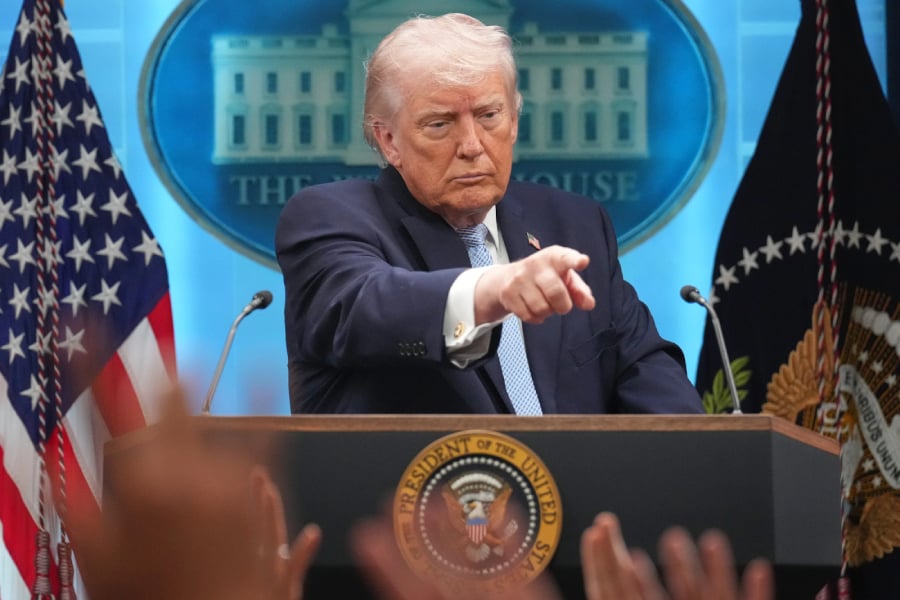
The White House is reportedly contemplating a significant expansion of its ban on importing Chinese technology for critical infrastructure, which includes vital sectors such as telecom networks, internet equipment, and data centers.
This marks the first review since 2022 by the Federal Communications Commission (FCC) to refine existing regulations. The current law has already restricted companies like Huawei, ZTE, Hytera, Hikvision, and Dahua from selling their equipment in the United States, as these firms are deemed to pose a national security threat and are included on a 'Covered List.'
Initially, the ban focused specifically on certain industries, but now the FCC is reportedly considering a broader application that goes beyond just phones and consumer technology. The agency aims to close existing loopholes in the acquisition of Chinese equipment, potentially making it impossible for any Chinese technology to be utilized in critical infrastructure, even if purchased through resellers or subsidiaries.
This initiative is part of a larger strategy by the FCC to decouple the U.S. technology sector from China. Recently, the agency has implemented bans on imports of Chinese-made drones, consumer routers, and telecommunications equipment, broadening its restrictions to cover entire sectors rather than limiting them to specific industries.
In response, the Chinese government has criticized these sweeping bans, labeling the U.S. government as a bully. Over recent years, China has engaged in reciprocal bans and tariffs against the U.S., escalating tensions between the two nations.
While such bans might lead to short-term increases in costs for telecom and IT infrastructure operators who need to replace existing Chinese equipment, they could also open the U.S. telecom and data center markets to non-Chinese operators, particularly if the FCC effectively closes third-party sales loopholes.
Focus on AI as a Critical Industry
Although AI is not the primary focus of the FCC's proposals, there is a growing sentiment that the agency's next target could be the artificial intelligence sector.
Critical infrastructure in the form of networking equipment—such as servers, storage solutions, routers, switches, and exchanges—is integral to the framework of data centers. Should the FCC implement a ban on Chinese companies, it could potentially bar them from participating in the largest infrastructure development in decades.
The Trump administration has already identified AI as a crucial market, previously blocking Nvidia from selling its most advanced chips to China. Recently, the U.S. government permitted Nvidia to sell some of its second-most powerful chip, the H200, to Chinese firms, but with the condition that 25 percent of each sale contributes to U.S. export duties. The administration is also considering a 1:1 chip output tariff to further reduce dependence on Chinese technology.
This tactic appears to align with the administration's strategy to enhance conditions for American businesses, even if it results in higher prices and decreased performance in the short term.
Nonetheless, the administration has not hesitated to target U.S. companies that oppose its policies, recently designating Anthropic as a 'supply chain risk.' This designation, the first of its kind for a U.S. company, prevents Anthropic from collaborating with any firm affiliated with the Pentagon.
In conclusion, the FCC's ban on foreign-made routers illustrates how Washington's national security measures are expanding beyond traditional telecom equipment, potentially reshaping the landscape for technology imports and partnerships.
Source: TechRepublic News