

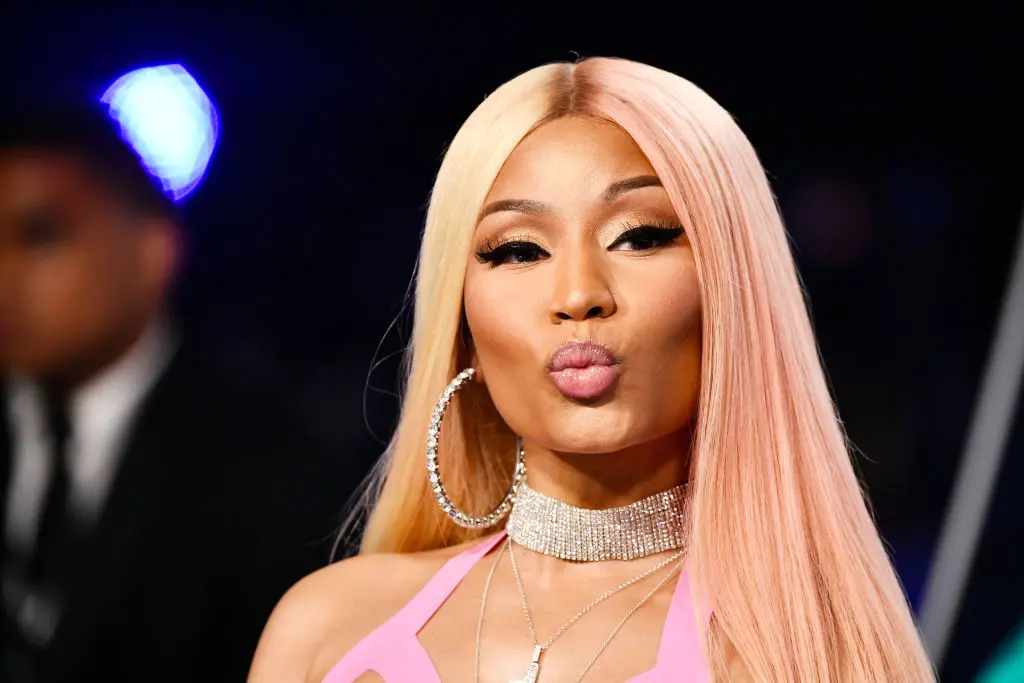
Nicki Minaj has long been one of the most influential voices in hip-hop, but her latest public stance has ignited a firestorm. In a nearly 90-minute interview with Time magazine, the rapper explicitly declared herself Donald Trump's “number one fan” and offered a detailed rationale for her political allegiance. The interview, published on May 15, 2026, marks Minaj's most extensive explanation of her support for the former president, a stance that has alienated many of her fans while emboldening her conservative followers.
The Interview: A Full-: Hearted Endorsement
Minaj did not hold back in the interview. She claimed that many celebrities quietly share her political leanings but are afraid of backlash. “Sometimes you just need one brave person to take the brunt of the impact. I think I am the catalyst for this change,” she said, though she declined to name any fellow artists. The rapper's declarations come at a time when the political landscape in the United States is deeply polarized, with celebrities often serving as lightning rods for public debate.
Her endorsement of Trump is not entirely new—she has previously tweeted support for him and met with him in the White House in 2020. However, this interview crystallizes her position and provides the most comprehensive explanation to date. Minaj framed her support as a matter of personal experience and disillusionment with the Democratic Party, rather than a deep- seated ideological alignment with Trump's policies.
The Swatting Incident That Changed Everything
According to Minaj, a turning point came when her home in California was targeted in a series of swatting incidents—prank calls that send armed police to a location under false pretenses. She claimed that California Governor Gavin Newsom did not respond to her requests for help. In contrast, Republican Representative Anna Paulina Luna of Florida facilitated contact with law enforcement and a private security service. “I was shocked. I had never seen anyone in politics treat me that way,” Minaj told Time.
This personal experience echoed a broader narrative among voters who feel abandoned by establishment figures. Minaj's story resonates with many who have grown frustrated with perceived inaction from political leaders. However, critics point out that local law enforcement handling of swatting falls under municipal and state jurisdiction, not that of a congresswoman from another state, making her gratitude somewhat politically motivated rather than purely practical.
Blame Game: Obama, Jay-: Z, and the Rap Rivalry
Minaj used the interview to air grievances against longstanding figures in the Democratic sphere. She specifically blamed former President Barack Obama and rapper Jay-: Z for her estrangement from the Democratic Party. “I think Jay-: Z cost Obama a lot in the end, whether he knows it or not,” she said. “A lot of rappers don't like Jay-: Z and were afraid to say it.” Her reasoning circles back to a long- standing feud with Jay-: Z and his wife Beyoncé, whom Minaj has occasionally criticized in past interviews and lyrics. In Minaj's view, Obama's association with Jay-: Z signaled to her that the Democratic establishment was aligned with her rivals in the industry.
This argument highlights a peculiarity of celebrity politics: personal vendettas and industry dynamics often merge with national political discourse. Minaj's claim that other rappers share her disdain for Jay-: Z may have some basis in the competitive nature of hip-: hop, but it is a far cry from a policy-: based critique of the Democratic Party.
Defending Controversial Statements: The Vaccine Tweets
When pressed about her infamous 2021 tweets suggesting that the COVID vaccine caused swollen testicles in Trinidad, Minaj defended them. She stood by her decision to amplify anecdotal reports, arguing that she was simply sharing information from a friend. Health experts and fact-: checkers have repeatedly debunked the claim, but Minaj's defense reflects a broader tendency among certain public figures to distrust official sources.
She also made a statement that has drawn widespread condemnation: regarding the 2020 election, Minaj said, “Obviously I don't know, but if he says it, I know he has done his homework.” This echoes Trump's unfounded claims of widespread voter fraud. When challenged, Minaj doubled down, asserting, “There are people voting who should not be voting.” Law enforcement and election officials have consistently reported that there is no evidence of significant fraud in the 2020 election. The interview also featured Minaj's explicit call for fans to pressure Congress to pass the SAVE Act, a bill that critics say would erect new voting barriers, particularly for women and people of color.
LGBTQ+ Backlash: A Costly Schism
One of the most painful consequences of Minaj's political shift has been the fracture of her relationship with the LGBTQ+ community, which had long been a pillar of her fanbase. In 2022, during a concert in Phoenix, she told the audience, “If you are born a boy, be a boy.” That comment, seen as transphobic by many, ignited a wave of disillusionment. In the Time interview, she did not retract the statement but instead doubled down on her belief that biological sex is immutable. The result has been a notable drop in support from queer fans who once celebrated her as an ally.
Minaj's evolution from a brash, sexually liberated rapper who once performed and partied at gay clubs to a conservative figure endorsing a Republican president is a complex narrative. It mirrors the broader trend of some hip-: hop stars moving toward conservatism, often citing religious values or personal experiences with crime and government overreach.
Rappers as Political Surrogates
The Minaj saga exemplifies a larger phenomenon in American politics: celebrities increasingly serve as proxies for political opinions, especially among younger voters who may be more influenced by fame than by policy details. In an era where trust in traditional media and government is low, people often look to figures they admire for cues on how to think. Minaj herself compared Trump not to previous presidents but to a pop icon: “Just like Marilyn Monroe represents a vibe—Donald Trump is his own vibe.”
This cognitive shortcut—valuing vibe over substance—is a hallmark of the current political moment. Minaj is not the first rapper to enter the political arena. Kanye West's 2020 presidential campaign, Ice Cube's engagement with the Trump administration, and even Lil Wayne's meeting with Trump all point to a growing intersection of hip-: hop and right-: wing politics. Yet Minaj's explicit declaration as the “number one fan” is unprecedented in its directness.
Background of a Superstar
To understand the weight of Minaj's statements, one must consider her stature. Born Onika Tanya Maraj in Trinidad and Tobago, she moved to Queens, New York, as a child. She broke into the music industry in the late 2000s with a series of mixtapes that showcased her rapid-: fire delivery and alter egos. Her debut album, Pink Friday (2010), went multiplatinum, and she has since become one of the bestselling female rappers of all time. She has won multiple BET Awards, MTV Video Music Awards, and has been nominated for Grammys. Her influence extends beyond music into fashion and social media, where she commands over 200 million followers across platforms.
Minaj's career has been marked by both fierce independence and a willingness to speak out about industry injustices. She has been openly critical of the music industry's treatment of women and has advocated for equal pay. Her political shift has therefore surprised many who saw her as a feminist icon. But Minaj's definition of feminism has always emphasized personal freedom, including the freedom to make choices that others may disagree with. From that perspective, her Trump endorsement is consistent: she sees it as an expression of independence from the “liberal Hollywood bubble.”
Reactions and Fallout
The reaction to the interview has been swift and divided. Conservative media outlets have praised Minaj for her courage, while liberal commentators and many fans have expressed disappointment. Hashtags such as NickiMinajIsOverParty trended briefly on social media, but her streaming numbers have not seen a dramatic decline. The rapper's core fanbase, known as the Barbz, remains fiercely loyal, although some have expressed discomfort with her politics.
Representative Anna Paulina Luna, the Republican lawmaker who helped Minaj after the swatting incidents, responded with a statement thanking Minaj for her support. “It's time for celebrities to stop being afraid to speak the truth. Nicki is leading the way,” Luna said. Meanwhile, LGBTQ+ advocacy groups have condemned Minaj's recent comments, calling them harmful to trans youth. GLAAD released a statement saying, “Nicki Minaj's words have consequences. We urge her to listen to her fans who are hurting.”
Whether Minaj's political evolution will hurt her long-: term career remains to be seen. Historically, celebrities who wade into partisan politics often face a backlash that eventually fades as time passes—unless they remain constant in their advocacy. Minaj has already announced she will campaign for Trump in the upcoming midterm elections. “I will do whatever it takes,” she told Time.
Donald Trump himself responded on social media, calling Minaj “incredibly smart and talented” and adding “the Barbz are the greatest fans in the world—and they love me!” The mutual admiration underscores a symbiotic relationship where each gains validation from the other.
The Broader Implications for Celebrity Activism
The case of Nicki Minaj forces a reconsideration of how celebrities function in democracy. For decades, artists have used their platforms to support progressive causes, from civil rights to climate change. But as the cultural landscape fragments, some are choosing to step into conservative territory, often at great risk to their reputation. Minaj's argument that she is a “catalyst” for change suggests she believes she is on the right side of history.
However, her reasoning—rooted in personal grudges and anecdotes rather than policy analysis—illustrates the limits of celebrity expertise. The question is not whether Minaj has a right to her opinion; she does. The question is whether the public should treat her opinion as equally valid as that of journalists, historians, or policy experts. The interview reveals a woman who trusts her own instincts above all, and who expects her fans to do the same. Whether that is a recipe for a healthier public square or a more bewildered one is up for debate.
As the 2026 midterms approach, Minaj has promised to be more vocal. Her next steps will be watched closely by both sides. If she can mobilize her massive fanbase to vote—or to vote in a particular direction—she may well become the most influential female voice in the conservative movement. For now, she remains a polarizing figure, celebrated by some as a maverick and criticized by others as a pawn. In a world where politics have become as much about identity as about policy, Nicki Minaj is betting that her brand can withstand the storm.
Source: Musikexpress News