

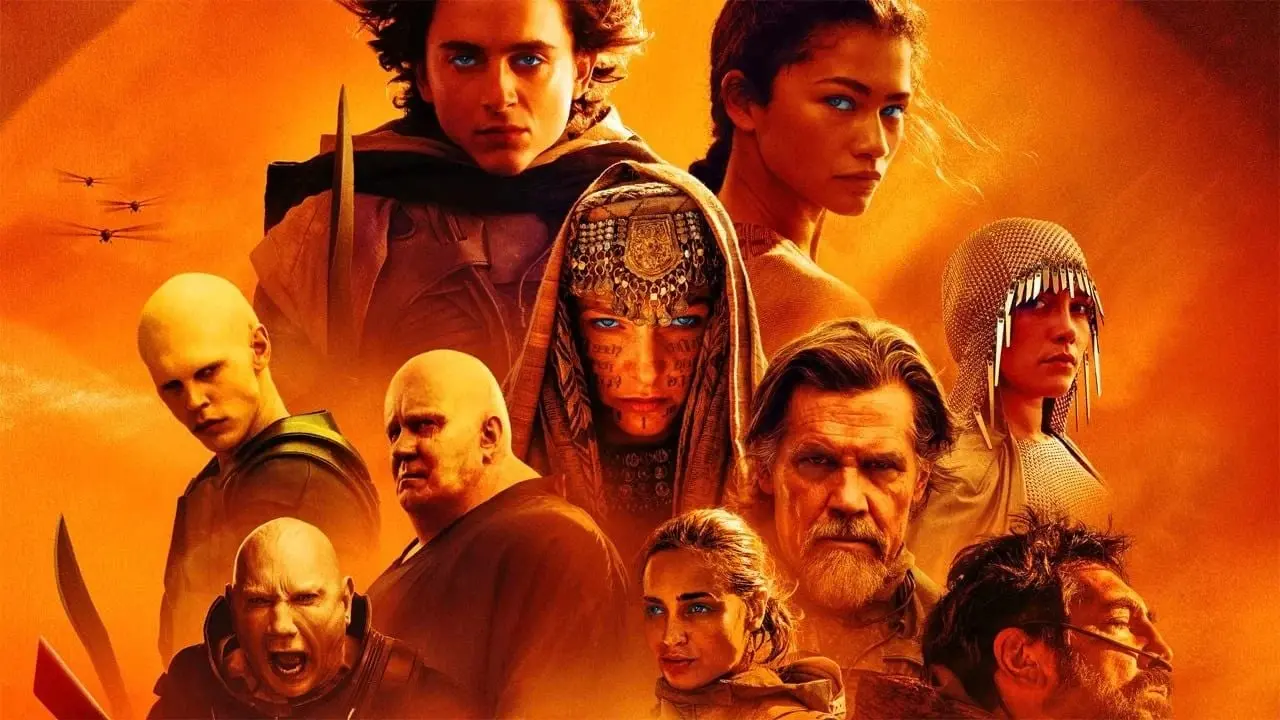
Denis Villeneuve, the visionary director behind the critically acclaimed adaptations of Frank Herbert's 'Dune', has recently clarified his stance on the future of the franchise. In an interview with Vanity Fair's 'Little Gold Men' podcast, Villeneuve emphasized that the two existing films constitute a complete diptych, not the first two parts of a trilogy. He stated, 'For me, 'Dune' is in a way completed.' This distinction is crucial for fans expecting a straightforward third installment.
The first two films, 'Dune' (2021) and 'Dune: Part Two' (2024), together adapt the entirety of Herbert's first novel. Villeneuve has always referred to them as a two-part project. Now, he is in the scripting phase for a potential third movie based on 'Dune: Messiah', the second novel in the series. However, Villeneuve is adamant that this would not be 'Dune 3' in the traditional sense. Instead, he envisions it as 'something new' with its own identity and filmmaking approach.
A Diptych, Not a Trilogy
Villeneuve's careful wording reflects his artistic intent. He explained, 'It's perhaps strange to say, but it's not like a trilogy. Because if I return there, I want to make something that feels different and has its own identity.' This perspective is rooted in the narrative jump between the first book and 'Messiah'. While the original 'Dune' ends with Paul Atreides ascending to the throne after a massive uprising, 'Dune: Messiah' takes place twelve years later, exploring the consequences of his rule. The story is more intimate, philosophical, and darker, dealing with political manipulation, betrayal, and the burden of prescience.
For Villeneuve, this tonal and thematic shift demands a different cinematic language. He has always been a director who treats each film as a unique entity, from the psychological thriller 'Prisoners' to the existential sci-fi of 'Arrival' and the cyberpunk noir of 'Blade Runner 2049'. A 'Messiah' adaptation would naturally carry a different rhythm, less epic in scale but more introspective. Villeneuve's comment that he will approach it 'with its own cinematic philosophy' suggests he is not merely adding a third chapter, but crafting a standalone work that exists in the same universe.
The Challenge of the Time Jump
One practical issue Villeneuve addressed is the twelve-year time skip. The actors, including Timothée Chalamet (Paul) and Zendaya (Chani), have barely aged since the first film, which was shot in 2019-2020. By the time production might begin, they will still look young. Villeneuve acknowledged, 'That's my problem. But I know how to solve it.' Possible solutions include makeup, digital aging, or perhaps a deliberate stylistic choice to downplay the physical aging, focusing instead on the emotional transformation. The time jump is significant in the narrative because Paul is now a weary emperor burdened by visions, while Chani has become estranged from him—a stark contrast to their passionate relationship in 'Part Two'. Villeneuve's solution will be crucial to maintaining believability.
Returning Characters and New Additions
'Dune: Messiah' will feature most of the surviving cast. Timothée Chalamet returns as Paul Atreides, now Emperor Paul Muad'Dib. Zendaya's Chani plays a pivotal role, as does Princess Irulan (Florence Pugh). One of the most anticipated returns is that of Duncan Idaho, played by Jason Momoa, who was killed in the first film but appears in 'Messiah' as a ghola (a resurrected clone). Villeneuve has hinted at this possibility, and Momoa's star power would be a major draw. Other characters like Stilgar (Javier Bardem) and Lady Jessica (Rebecca Ferguson) may also reappear, though their roles in the sequel novel are more limited. The story introduces new factions like the Bene Tleilax, who create the ghola, and the Spacing Guild's navigators, who plot against Paul.
Villeneuve's commitment to staying true to the source material suggests that 'Messiah' will not shy away from its controversial ending—a subversion of the hero's journey that sets up the next book, 'Children of Dune'. He has previously stated that he admires Herbert's willingness to deconstruct the myth of a savior figure, and 'Messiah' is where that deconstruction begins in earnest.
Production Status and Release Date
Warner Bros. has already reserved a December 2026 release date for Villeneuve's next film. While not officially announced as 'Dune: Messiah', internal IMAX presentations have labeled it as a 'untitled Dune film from Denis Villeneuve'. Combined with his comments about the script being in progress, it is highly likely that production will begin in 2025. Villeneuve is known for his meticulous preparation, and given the success of the first two films—combined global box office of over $1.5 billion—the studio is eager to continue. However, Villeneuve has also expressed exhaustion after completing the epic second part, noting that he needed rest. The timeline of a 2026 release allows for a deliberate development process.
The director's approach to 'Messiah' as a distinct work also opens the possibility that it could be his last 'Dune' film. Herbert wrote six novels in the main series, but Villeneuve has only committed to adapting 'Messiah'. Whether he will continue beyond depends on the reception and his personal interest. For now, he is focused on creating a film that stands on its own, separate from the diptych. In his words, 'I want to make something that feels different.'
Historical Context and Legacy
The Dune franchise has a complicated history of adaptation. David Lynch's 1984 film was a box office disappointment, and various attempts at sequels or a TV series never fully captured the book's depth. Villeneuve's version is widely praised for its visual grandeur, political complexity, and faithfulness. By treating the first book as a diptych, he gave each part room to breathe—unlike Lynch's single film, which crammed too much. Now, with 'Messiah', Villeneuve faces a different challenge: adapting a novel that is shorter, denser, and more cerebral. The book's tone is often described as 'tragic' and 'cynical', a deliberate antidote to the epic heroism of the first book.
This shift aligns with Villeneuve's filmography. His films often explore themes of time, memory, and sacrifice—think of 'Arrival' or 'Blade Runner 2049'. 'Dune: Messiah' offers a perfect vehicle for these interests. The story delves into the price of prescience, the dangers of messianic figures, and the nature of free will. Villeneuve has already shown his ability to handle such themes; the character of Paul in 'Part Two' struggles with the violent path he must take. In 'Messiah', that struggle becomes the entire plot.
Fans eager for more spectacle should not be disappointed, but Villeneuve's emphasis on 'new identity' suggests a leaner, more intimate film. The battle scenes in 'Messiah' are less about grand armies and more about assassination plots and psychological warfare. IMAX cameras may still be used for the vast desert landscapes, but the focus will be on the internal conflicts of characters. This could be a bold move that differentiates the film from other franchise entries.
In terms of cultural impact, Villeneuve's 'Dune' adaptations have already revived interest in Herbert's novels, leading to increased book sales and even new adaptations like the HBO Max spin-off 'Dune: Prophecy' (previously announced). A third film would solidify the franchise's place in modern sci-fi cinema, alongside 'Star Wars' and 'The Matrix'. However, Villeneuve's insistence on artistic independence ensures that it will not become a factory-line product.
As the writing progresses, more details may emerge about the cast and production schedule. For now, Denis Villeneuve has made it clear: 'Dune: Messiah' will not be 'Dune 3'. It will be a new journey, with a new voice, and fans should expect the unexpected. Warner Bros. has the date locked, and the industry is watching to see if Villeneuve can once again defy conventions and deliver a masterpiece that stands both as a sequel and as its own singular work of art.
Source: FILMSTARTS.de News