

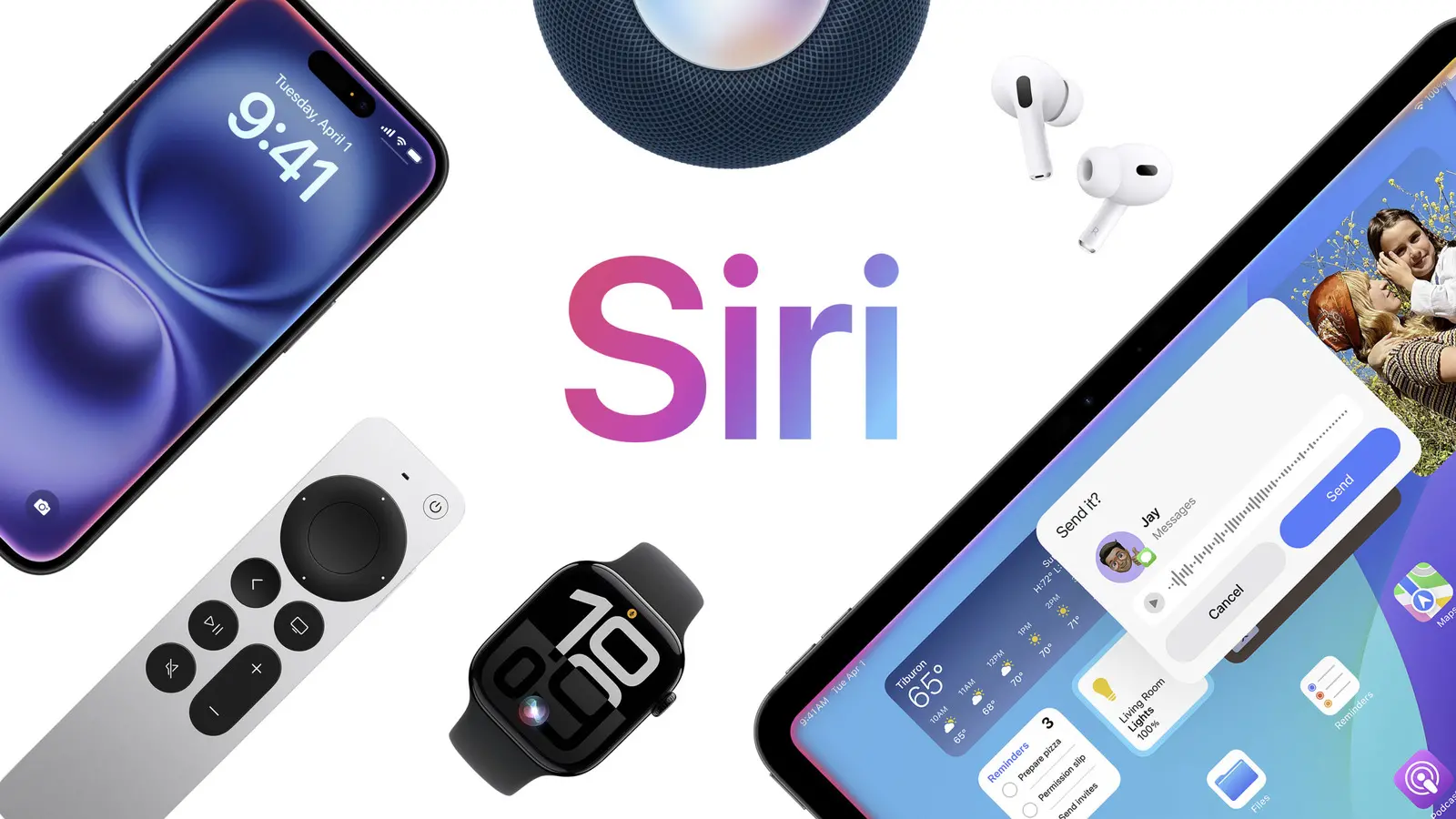
Apple has agreed to pay $250 million to settle a class action lawsuit that accused the company of misleading iPhone buyers in the United States about the release of an updated, AI-powered version of Siri. The lawsuit, filed shortly after the iPhone 16 launch, claimed that Apple knew or should have known that the advanced Siri features announced at WWDC 2024 would not be available within the promised timeframe. According to a report from The Financial Times, the settlement marks one of the largest consumer compensation agreements related to unfulfilled product promises in the tech industry.
The settlement, which still requires approval from a federal judge, would cover US buyers of the iPhone 16 lineup and the iPhone 15 Pro. These were the first devices marketed as being built for Apple Intelligence, the company's suite of AI features that included a new contextual Siri. Notably, Apple does not have to admit any wrongdoing as part of the deal. Instead, the company will issue payments to affected consumers who can demonstrate they expected the Siri features to be operational upon purchase.
Apple originally showcased the new Siri in June 2024 alongside the broader Apple Intelligence platform. The demo showed Siri understanding context across apps, performing actions on the user's behalf, and even accessing information from inside documents and messages. The promise was a personalized assistant that could reason about the user's digital life—a significant leap from the limited, query-based Siri that had existed since 2011. However, nearly two years later, that Siri has yet to ship. While Apple slowly rolled out other Apple Intelligence features—such as system-wide writing tools, image generation, and ChatGPT integration—the core Siri revamp remained elusive.
The company’s silence on the delay angered both consumers and investors. Apple did not publicly acknowledge that the advanced Siri was postponed until March 2025, more than five months after the iPhone 16 went on sale. By then, Apple had already run television ads and promotional materials showcasing the new Siri, including a commercial where a user asked Siri to find an old photo and schedule a meeting based on it. After the delay announcement, those ads were quickly pulled from circulation. The class action argued that Apple’s marketing created a false impression that the feature was ready or imminent, thereby artificially boosting iPhone sales.
The history of Siri's stagnation is well documented. Acquired by Apple in 2010, Siri was initially groundbreaking, but soon fell behind competitors like Google Assistant and Amazon Alexa. Apple’s emphasis on privacy and on-device processing, while laudable, also slowed down innovation. The company attempted to improve Siri with deep learning and neural engines in later iPhones, but the assistant remained brittle in complex tasks. Apple’s 2024 vision—codenamed “Apple Intelligence”—was supposed to change that by leveraging large language models (LLMs) and on-device semantic indexing. The failure to deliver Siri on time exposed deeper challenges within Apple’s AI division, including internal debates about privacy safeguards, model accuracy, and integration with third-party apps.
To finally deliver on its promise, Apple forged a partnership with Google to use the Gemini models. This is a significant departure for Apple, which has historically controlled all core software experiences. By licensing Google’s advanced language models, Apple can offer the contextual Siri it advertised without having to build a world-class LLM from scratch. The new Siri, along with additional AI features, is now expected to debut in iOS 27, which is currently slated for a fall release. Apple has also hinted that Siri will support multimodal inputs, such as camera and voice, and will be able to carry out multi-step commands across different apps.
The $250 million settlement is not just a financial hit; it also tarnishes Apple’s reputation for reliability and truth in advertising. For decades, Apple has prided itself on products that “just work.” The Siri fiasco, combined with other delayed features like the next generation CarPlay, suggests that the company is struggling to meet its own ambitious timelines, especially as it pivots toward generative AI. The case also serves as a warning to other tech giants that over-promising on AI capabilities can lead to costly legal repercussions. Regulators and consumer advocacy groups have closely watched the case, as it raises questions about what constitutes deceptive advertising in the fast-moving field of artificial intelligence.
Meanwhile, the broader AI assistant market continues to evolve. Google Assistant has received contextual upgrades via Bard (now Gemini), Amazon has integrated Alexa with new generative models, and new players like ChatGPT’s voice mode and Anthropic’s Claude are setting high expectations. Apple’s delayed Siri risks making the company seem like a follower rather than a leader in AI. However, the company still has a massive installed base of over 1.5 billion active devices, and a well-executed AI assistant could still be a differentiator—especially if Apple manages to combine it with its strong stance on privacy. The company insists that Siri in iOS 27 will process everything on-device, with no data sent to the cloud unless the user explicitly opts in.
The specific terms of the settlement will be public after the judge’s approval hearing, scheduled for early next year. Claimants will have to provide proof of purchase and make a simple statement that they expected the AI Siri features to be included. Apple has set aside funds for legal fees and consumer payouts; each affected customer could receive between $50 and $200 depending on the number of claims. Given the popularity of the iPhone 16, the total payout might reach the full $250 million cap. Some consumer advocates have criticized the settlement for not forcing Apple to change its marketing practices. The case highlights a growing tension between bold product announcements and the reality of software development schedules, especially in the unpredictable realm of generative AI.
In the months ahead, analysts will watch whether Apple can successfully launch Siri as a true AI assistant. If it fails again, the company could face further lawsuits or a loss of consumer trust. For now, the $250 million settlement provides a measure of closure, but it does not erase the fact that thousands of iPhone users bought a device based on a promise that was not kept. Apple is now under pressure to make Siri 2.0 not just functional, but exceptional—and to avoid any more costly delays.
Source: Engadget News